Cucumis sativus Leaves Showing Moderate Stress in Midseason
Cucumis sativusCucumis sativus
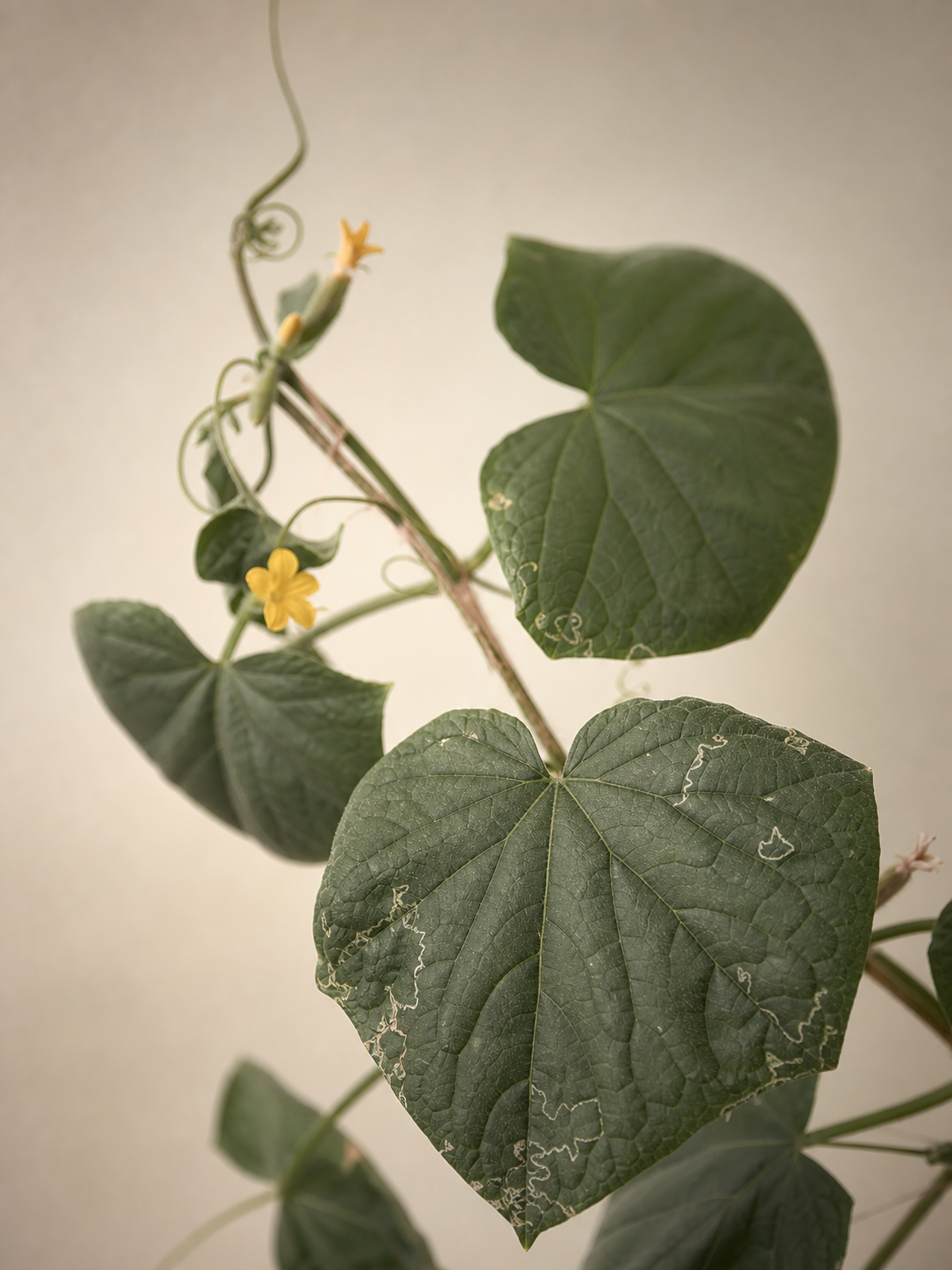
DIAGNOSIS
This Cucumis sativus shows a moderate leaf-level problem: the foliage is under visible stress, but the plant is not beyond recovery. In cucumbers, leaf decline usually reflects environmental imbalance or accumulated cultivation stress, because the leaves are the first place where watering inconsistency, heat load, root strain, or nutrient uptake issues become visible.
PLAN FOR THE COMING DAYS
- 01
Keep soil moisture even and avoid swings between dryness and saturation.
- 02
Check the root zone for compaction, standing wetness, or recent disturbance.
- 03
Watch new leaves for improved color and firmness over the next several days.
FIELD NOTES
Cucumis sativus is a fast-growing crop, and its leaves often act like an early warning system. When a cucumber plant develops a moderate leaf problem, the message is usually not about one isolated leaf but about the balance between roots, water, temperature, and nutrient flow. The good news is that moderate leaf stress often improves when the growing conditions become steadier.
Why it happens
Cucumber foliage is thin, active, and quick to respond to change. That makes it useful diagnostically: when the plant receives uneven moisture, experiences high daytime heat, or struggles to move water efficiently through the roots, the leaves are typically the first organs to show stress. A plant can also show similar leaf symptoms when nutrient uptake is slowed, not always because fertilizer is absent, but because the root zone is too dry, too wet, compacted, or otherwise strained.
Because the problem category here is limited to the leaves, the most careful interpretation is moderate foliage stress rather than a confirmed infectious disease. In practice, that means the plant is signaling that its current conditions are not fully aligned with its needs. The pattern matters more than any single blemish: scattered decline, dullness, soft collapse during heat, or persistent loss of leaf quality can all point to a cultivation imbalance.
How to recognize it
A moderate leaf issue on Cucumis sativus usually looks noticeable without yet becoming catastrophic. Leaves may appear tired, less turgid, uneven in color, or mildly damaged around edges or surfaces. The canopy may lose some of its usual vigor even if stems and newer growth are still functioning.
Gardeners often notice that the plant looks worse in the hottest part of the day and somewhat better later on, which is a useful clue toward water stress or root inefficiency. If symptoms continue despite normal feeding, that can also suggest the plant is not absorbing resources well from the root zone. The key distinction at this stage is that the plant is stressed, not finished.
Recovery plan
Since no specific treatment schedule is supplied, the safest response is careful stabilization. Review moisture patterns first: cucumber plants respond best to consistent, even hydration rather than swings between dry soil and saturation. Next, reduce avoidable stress around the root zone, including disturbance, compaction, or irregular watering habits.
Observe whether newer leaves emerge stronger than older ones over the next several days. That is often the simplest sign that conditions are improving. If decline continues to spread rapidly, the case may need a closer inspection for hidden root or pathogen involvement, but a moderate leaf presentation alone most often points to stress management rather than drastic intervention.
Prevention
For Cucumis sativus, prevention depends on steadiness. Keep watering regular, protect the plant from repeated heat-and-drought swings, and maintain a root environment that can breathe while still holding moisture. Healthy cucumber leaves are usually the result of stable cultivation, not aggressive correction.
In short, the foliage is telling a story about conditions below and around the plant. When those conditions become more even, the leaves often follow.
IN THE OWNER'S WORDS
“I thought it was just a few tired leaves, but the whole plant was really reacting to uneven conditions.”
COMMON QUESTIONS
0401Why are my Cucumis sativus leaves looking stressed?
Cucumis sativus leaves often show stress first when watering is inconsistent, heat is intense, roots are strained, or nutrient uptake is impaired by root-zone conditions.
02Is moderate leaf stress on cucumber reversible?
Yes, moderate leaf stress is often reversible if the plant's moisture, temperature exposure, and root conditions are stabilized before decline progresses.
03Does leaf damage always mean disease?
No. A leaf-level problem can reflect environmental or cultivation stress rather than a confirmed infectious disease, especially when the issue is moderate and generalized.
04What should I monitor first on a stressed cucumber plant?
Start with moisture consistency and root-zone health. Dry-down cycles, waterlogging, and compaction commonly show up first in the leaves.