Paulownia tomentosa With Sudden Leaf Drop in Summer
Paulownia tomentosaPaulownia tomentosa
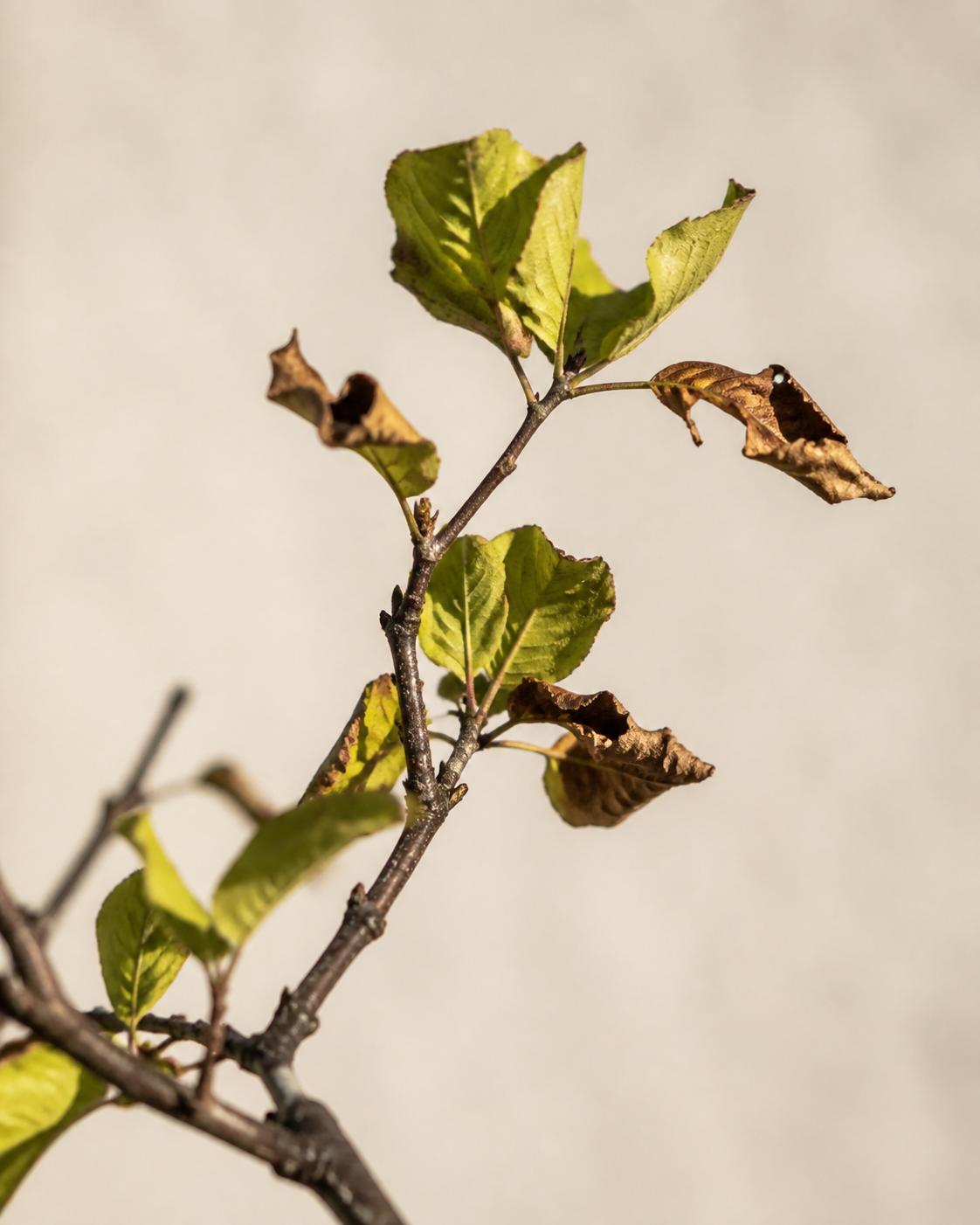
DIAGNOSIS
This Paulownia tomentosa is experiencing critical leaf drop, a sign that the tree is under serious physiological stress. In paulownia, sudden shedding usually points to root disturbance, prolonged moisture imbalance, or acute environmental shock that interrupts the plant’s ability to support its foliage.
PLAN FOR THE COMING DAYS
- 01
Check soil moisture before watering again.
- 02
Keep watering consistent, not extreme.
- 03
Inspect the root zone for soggy or compacted soil.
- 04
Avoid transplanting, heavy pruning, or extra disturbance.
- 05
Monitor for new buds and slowing leaf loss.
FIELD NOTES
Paulownia tomentosa is valued for its large, soft leaves, so sudden defoliation is especially noticeable. When a paulownia begins dropping leaves outside normal seasonal timing, it usually means the tree is no longer able to balance water movement, root function, and leaf demand. Because the severity here is critical, the symptom should be read as a whole-plant stress response rather than a cosmetic issue.
Why it happens
Leaf drop in Paulownia tomentosa is most often a protective reaction. If roots are stressed by staying too wet, drying out for too long, becoming compacted, or being disturbed, the tree may shed foliage to reduce water loss. A similar response can happen after abrupt heat, wind exposure, transplant shock, or other environmental changes that overwhelm the plant’s transport system.
In practical terms, the tree is making a hard trade-off: fewer leaves mean less evaporation and less strain on damaged or underperforming roots. That is why heavy drop can appear quickly once stress passes a threshold. Even if some stems remain alive, the canopy may thin rapidly when the root zone cannot reliably supply moisture and oxygen.
How to recognize it
Critical drop is more than the occasional yellow leaf. You may see clusters of leaves falling within a short period, limp or stressed foliage before abscission, and a canopy that suddenly looks sparse. The timing is important: if this is happening during active growth rather than autumn senescence, it strongly suggests stress rather than a normal seasonal cycle.
Look at the root environment as closely as the crown. Soil that stays soggy, turns hard and dry between waterings, or drains unevenly can all contribute. Recent planting, digging nearby, mechanical injury, or abrupt weather shifts may also help explain why the leaf drop started.
Recovery plan
Because no step-by-step care schedule is provided here, the safest response is stabilization rather than aggressive intervention. Keep conditions as even as possible and avoid adding extra stress while you assess the plant. The priority is to restore a workable balance around the roots and reduce further shock.
Do not assume more water is always the answer. Overwatering and underwatering can both end in leaf drop, so check actual soil moisture before changing the routine. If the site is compacted or poorly drained, improving root-zone aeration over time matters more than dramatic one-time treatments.
Prevention
Paulownia performs best when root conditions stay consistent and the tree is not forced through repeated swings between excess moisture and drought. Stable watering, decent drainage, and protection from severe site stress help the canopy stay attached and functional. Once a tree has responded with critical drop, recovery depends on whether the roots and living stems can re-establish a steady internal balance.
Watch for new buds, firm green tissue under the bark, and a slowing of leaf loss. Those signs suggest the tree may still recover if conditions are corrected and kept steady.
IN THE OWNER'S WORDS
“I first thought it was just a few tired leaves, and then the whole tree seemed to let go at once.”
COMMON QUESTIONS
0401Why is Paulownia tomentosa dropping leaves suddenly?
Sudden leaf drop usually means the tree is under serious stress. The most common triggers are root problems, prolonged watering imbalance, compaction, or abrupt environmental shock.
02Can overwatering cause leaf drop in Paulownia tomentosa?
Yes. Roots that stay too wet lose access to oxygen, and the tree may shed leaves to reduce strain. Underwatering can produce a similar result, so soil moisture should be checked before changing care.
03Is leaf drop normal for Paulownia tomentosa in summer?
No, heavy leaf drop during active growth is not considered normal seasonal behavior. It is more consistent with stress than with natural autumn dormancy.
04Will Paulownia tomentosa recover after critical leaf drop?
Recovery is possible if the roots and living stems are still viable and conditions become stable. Signs of potential recovery include slowing leaf loss, new buds, and green tissue under the bark.